 UMP-X
Stadtmodelle rechnen lassen. Ergebnis auf der Karte, Daten zum Mitnehmen.
Die Urban Model Platform bündelt Simulationsmodelle aus Forschung und Verwaltung an einer Stelle. Modell auswählen, Parameter setzen, Ergebnis ansehen und als Datei mitnehmen. Ohne eigene GIS-Installation und ohne eigene Rechenleistung.
Die Anmeldung läuft über Keycloak. Du verlässt dabei kurz diese Seite und kommst danach hierher zurück.
Ansehen geht ohne Konto. Für das Ausführen eines Modells ist eine Anmeldung nötig.

Chat mit deiner KI
UMP-X stellt kein Sprachmodell und bezahlt keines. Du verbindest deins, dann führt es dich durch den Katalog. Die Wahl und die Kosten bleiben bei dir.
Oder bring deinen Client mit
Die Modelle stehen auch als Werkzeuge über MCP bereit. Wer schon einen KI-Client benutzt, verbindet ihn einmal und arbeitet von dort aus weiter.
So läuft ein Szenario
- 1
Modell wählen
Der Katalog zeigt, welche Modelle es gibt und was sie rechnen. Ansehen geht ohne Anmeldung.
- 2
Parameter setzen
Das Formular entsteht aus der Beschreibung des Modells. Wer nichts einträgt, bekommt die Voreinstellungen des Modells.
- 3
Ergebnis mitnehmen
Das Ergebnis erscheint auf der Karte und lässt sich als Datei herunterladen, etwa für QGIS.
Modelle, die heute rechnen
Der Katalog steht allen offen. Was sich ohne Anmeldung starten lässt, ist am Modell vermerkt.
Agent-based Test Model
An exemplary model that creates agents over various districts in Hamburg, which then cycle from various Stadtrad stations to others.
SEIR Disease Infection Model
An SEIR infection model developed by the Vensim community.
growbike
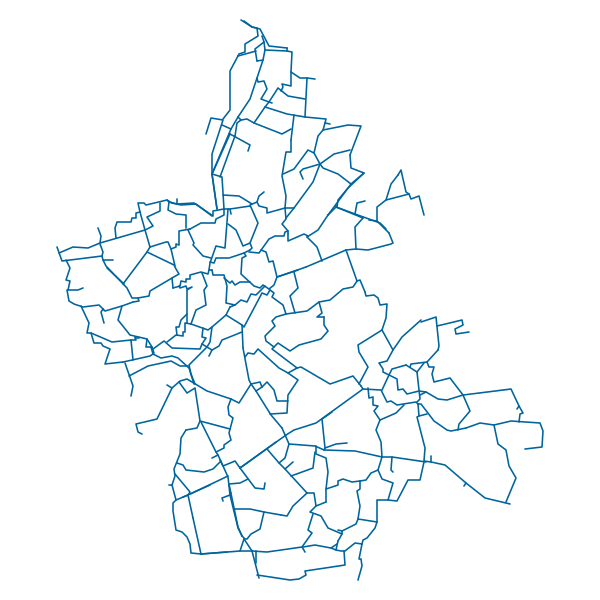
using the growbikenet package to build bicycle networks from scratch
fixbike
using the fixbikenet package to detect gaps in developed bicycle networks
Prepare city data (admin)
Collects the status-quo data of a city from open sources (OpenStreetMap via Overpass: buildings, trees, land cover, streets; GEDTM30 terrain or a given terrain model; PVGIS and ERA5 weather) into the shared city data collection used by all models. Run asynchronously: large areas take several minutes. The layers are available as soon as the job has finished.
Street network permeability
How permeable is a neighbourhood for walking or cycling? Builds the street network of a prepared city (or of an area within it) and returns the streets coloured by how much through movement they carry, plus indicators: intersection density, share of dead ends, mean segment length between intersections, street density and the detour factor (network distance compared with the straight line). Works on the cities prepared with the model "Prepare city data" (UMEP model server); run that first for a new city.
MCP: die Modelle in deinem eigenen KI-Client
MCP ist ein offener Standard, über den KI-Clients Werkzeuge anderer Anbieter benutzen. UMP-X stellt seine Modelle darüber bereit: einmal verbinden, mit dem eigenen Konto anmelden, und die Modelle stehen im Client zur Verfügung. Es gelten dieselben Rechte wie hier.